


Return Inward
Thus, the above are the entries for recording the return inward in trial steadiness and financial statements. A contra-revenue account is just like the rebellious teenager in your beloved ones of revenue accounts. Instead of having a credit score stability like its straight-laced siblings, it struts around with a debit steadiness. If the customer actually returns the products, the enterprise reverses the refund liability and adjusts inventory. Enterprise transactions of producing and buying and selling entities involve an trade of different varieties of items. Output of 1 entity becomes enter for the following and so forth, forming a supply chain across the industry.
It’s all about transparency and maintaining these financial statements trustworthy (because no person likes a cooked-books scandal). Underneath Ind AS 115 – Income from Contracts with Clients, businesses must estimate and account for potential sales returns at the time of recognizing income. If you purchased a hundred models of inventory from a supplier however returned 20 due to high quality points, that is treated as return outwards. Return outwards can be referred to by the name of purchase returns. The quantity of outward return (or) return on purchases is subtracted from the whole quantity of purchases made by the corporate.
Do Sales Returns And Allowances Get Closed?
The purchaser can return the item when they’re unhappy or obtain poor quality. The return course of might be processed within an inexpensive time frame to be compensated. Return inwards is the time period used to describe returned gadgets after being sold to the client. This often occurs towards warranties and in the case of outright good returns.
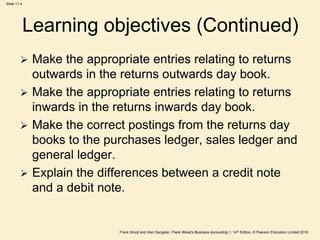
Return inward is the contra account of the sale account on income assertion, so it’s going to https://www.personal-accounting.org/ deduct the sale balance during the interval. In the aggressive market, the supplier even permits the purchasers to return the goods with none questions ask. It means that they can return the products for any cause even it’s working fantastic. They want to present that their merchandise are superb and the buyer is not going to regret after purchase.
Impact On The Books Of Accounts
Monitoring these returns may help businesses optimize packaging, improve transport strategies, and improve buyer help processes, making certain a smoother post-purchase experience returns inwards or sales returns definition. This kind of gross sales return entails refunding the client in money for the returned product. Money refunds are commonly offered when a product is defective, incorrectly delivered, or fails to satisfy the customer’s expectations. A returns inwards account is debited to replicate the truth that items are out there in to the business.
Return Inward is a crucial term in finance as it presents a critical insight into the operational effectivity and customer satisfaction of a company. It is a state of affairs by which a customer returns items to the seller, usually due to defects or dissatisfaction. Return outward is the return which firm made to the provider after purchase.

It becomes very important to incorporate return inward in ultimate accounts. If projected with out return inward, the entire gross sales quantity would replicate the wrong amount in the accounting. Returns initiated by the client being termed as return outwards and returns acquired back by the vendor being termed as return inwards. The article “return inwards vs return outwards” seems at which means of and variations between these two phrases. It decreases the whole sales income and is reported on the income assertion.
Relation Between Value Of Inventory And Returns Outwards
Return outwards will hold the steadiness of credit and is placed on the aspect of the trial with the credit stability. A firm ought to keep monitor of the variety of bills it has incurred when making a buy order. In contrast, return outward refers to instantly returning the products from the shopper base to suppliers. Return Inward will impact two accounts, sales, and accounts receivable or cash. The firm merely debit return inward and credit accounts receivable. The return inward will accumulate into one account which contra with sale account.
Processing returns isn’t free—it comes with additional costs for transport, restocking, and handling. Businesses with high return charges can see a significant impact on profitability because of these added bills. A gross sales return is recorded commonly underneath “Sales Returns and Allowances”. This account is introduced in the earnings assertion as a deduction from “Sales” (or Gross Sales). Gross Sales return is recorded as a reduction in sales and inventory, and gross sales allowance is recorded as a reduction in sales.
- A Debit Note is a document issued by a buyer to a seller as an official request for a credit note, often because of a return outward.
- This account is presented within the earnings statement as a deduction from “Sales” (or Gross Sales).
- In addition to clear guidelines, defining specific criteria for returnable items ensures that only eligible products are accepted for returns.
- Discover out first how the client made the preliminary cost and the way the business returns the funds.
The affect of returns and allowances on internet income also has implications for efficiency metrics and business valuation. Traders and analysts closely scrutinize these figures, as they can have an effect on earnings per share (EPS) and different ratios used to evaluate a company’s financial well being and growth prospects. Understanding the definition, that means, and nuances of gross sales returns is essential for businesses aiming to optimize their operations and enhance buyer satisfaction. Options embody charging a restocking fee, allowing free returns within a set timeframe, or only allowing returns with a receipt. Accountants can enter these transactions right into a sales returns account after confirming that a return complies with a company’s policy. It refers to all kinds of returns, whether returns outwards (purchases returns) or returns inwards (sales returns).